From the corridors of Parliament to the streets of Kampala, from the diplomatic stage in Mpigi to the unfolding debate over hunger in Karamoja, Uganda has had a week full of stories, personalities and moments that refused to go unnoticed.
It was a week in which traders demanded answers, Government scrambled to calm business tensions, health officials strengthened the country’s defences against Ebola, and questions about accountability, public spending and urban planning returned to the national conversation.
There were also moments of diplomacy and economic optimism, as Uganda and Tanzania celebrated a new industrial investment, while some of the country’s most influential figures once again found themselves commanding public attention.
Politics, business, security, public health and Parliament all had their protagonists.
Some made news by taking decisions. Others by confronting difficult questions. And a few simply needed to make one move to bring the country talking again.
Here are the 10 personalities who stood out in Uganda’s news this week.
1. Yoweri Museveni — The President at the centre of the traders’ storm
President Yoweri Museveni had a week of balancing acts as the Government confronted mounting pressure from Kampala traders who closed shops over taxes, customs procedures and Uganda Revenue Authority enforcement.
The traders’ strike threatened to disrupt commercial activity in Kampala, forcing Government to move quickly to contain the dispute and reassure the business community.
Museveni appealed to traders to suspend their strike as Government worked to address their concerns. He is also expected to meet traders on November 24, in a meeting that could prove decisive in resolving the dispute.
The administration has indicated that tax policy affecting textiles and garments will be reviewed, with the matter expected to go through Cabinet and Parliament.
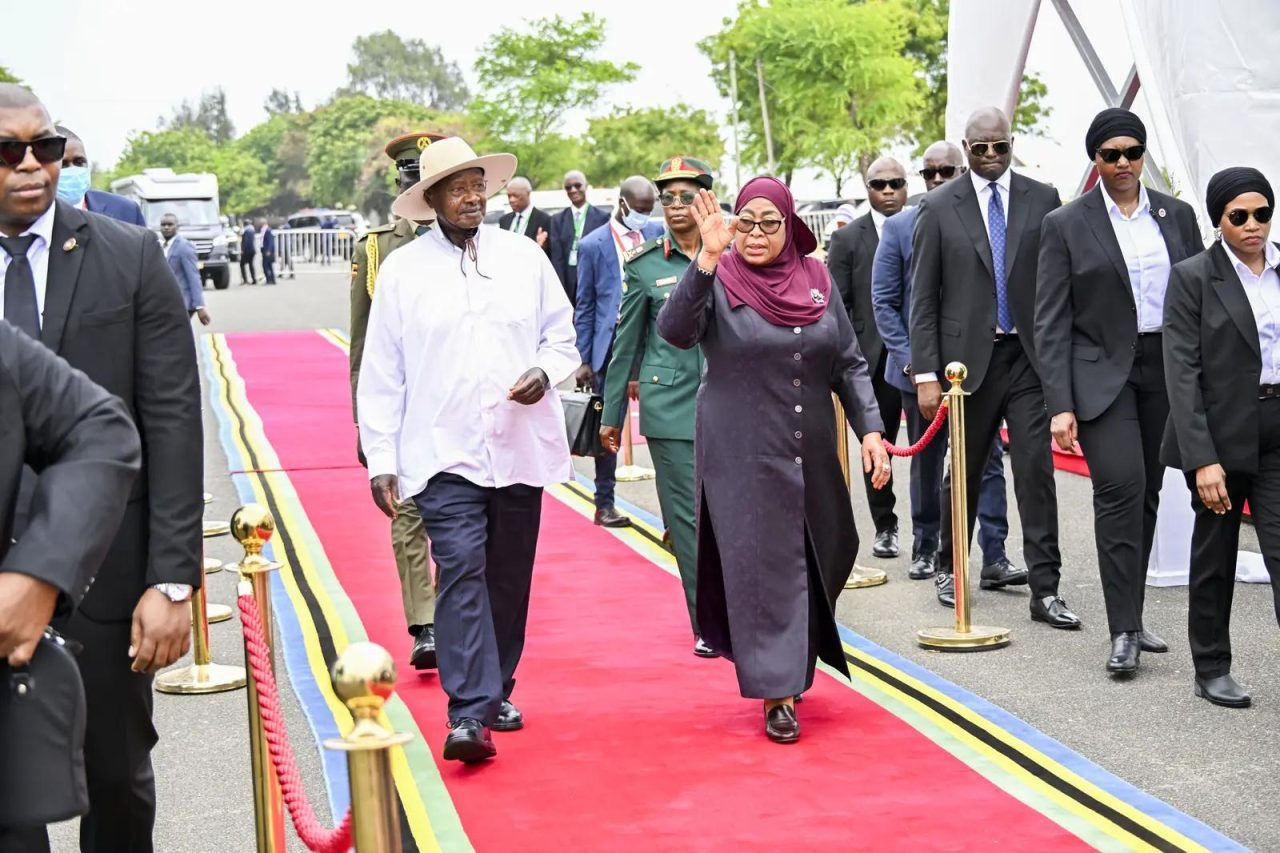
But the President’s week was not all about domestic economic tension. He also joined Tanzanian President Samia Suluhu Hassan in Mpigi to commission a $30 million vehicle assembly plant, showcasing Uganda’s industrial ambitions and its push to attract investment.
From calming frustrated traders to celebrating manufacturing investment, Museveni’s week reflected the two competing demands confronting his administration: protecting businesses while pushing the economy towards industrialisation.
The traders’ dispute remains unfinished business, and the November 24 meeting will be one of the week’s developments to watch.
2. Samia Suluhu Hassan — The neighbour who brought investment and diplomacy to the table
Tanzanian President Samia Suluhu Hassan was one of the week’s prominent guests, but her visit was more than a diplomatic courtesy. It carried an economic message about Uganda and Tanzania’s growing ambitions to deepen industrial cooperation, trade and regional integration.
Together with Museveni, Suluhu commissioned a $30 million vehicle assembly plant in Mpigi, a development expected to contribute to Uganda’s manufacturing ambitions and create opportunities in the automotive value chain.
The two leaders also used the visit to discuss regional cooperation, infrastructure, trade, security and other issues affecting the two neighbouring countries.
Uganda and Tanzania share strategic interests in major infrastructure projects, including the East African Crude Oil Pipeline, which has the potential to reshape regional energy and economic cooperation.
Suluhu’s presence in Uganda was a reminder that the country’s economic ambitions cannot be pursued in isolation. Regional partnerships, access to markets, transport infrastructure and investment are increasingly central to the growth conversation.
Her week in Uganda therefore carried both diplomatic symbolism and practical economic significance.
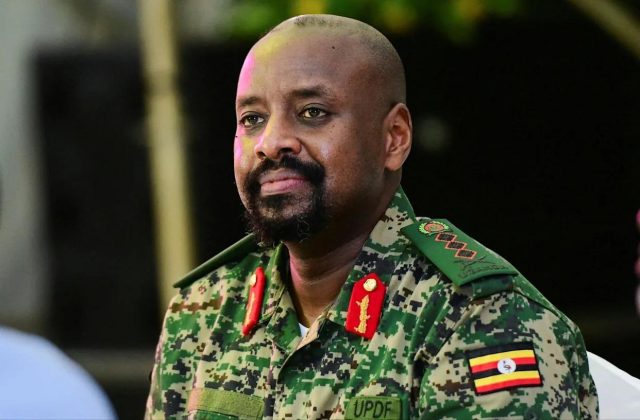
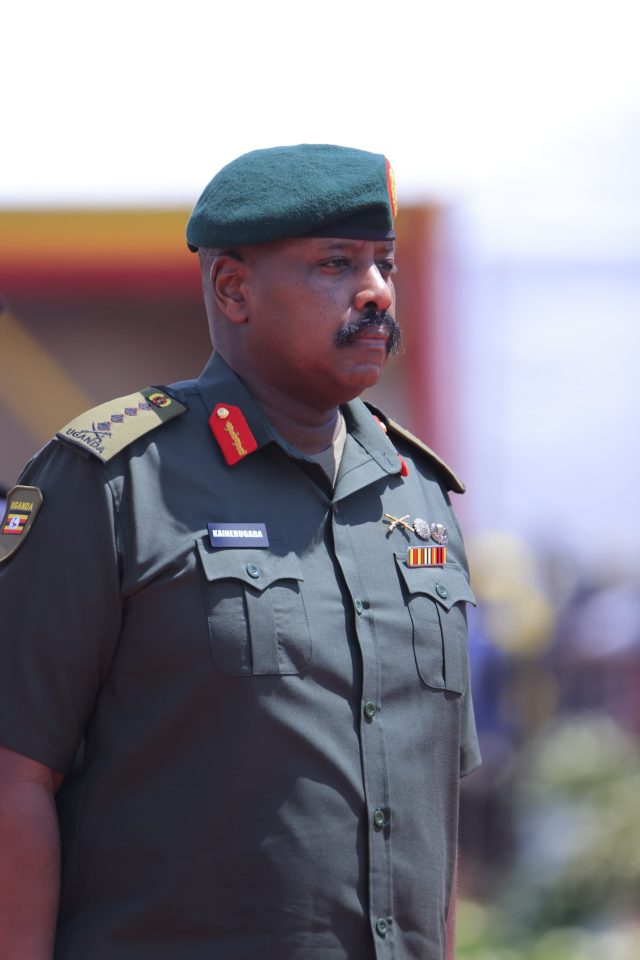
3. Gen Muhoozi Kainerugaba — The return to X that reopened the conversation
Few Ugandans can return to social media and instantly command the attention that Gen Muhoozi Kainerugaba attracts.
The Chief of Defence Forces’ return to X, formerly Twitter, reignited public interest in his online presence, a platform where his statements have previously generated debate on politics, security, diplomacy and Uganda’s future.
Muhoozi’s relationship with X has always been anything but ordinary. His posts have, at different times, attracted regional attention, sparked political debates, triggered diplomatic conversations and generated intense reactions among his supporters and critics.
His return puts him back in a space where a single post can quickly become a national talking point, travel beyond Uganda’s borders and attract responses from people across the political divide.
For his supporters, Muhoozi’s online presence is a direct and unfiltered way of communicating. For his critics, it is a source of controversy and questions about the boundaries between military leadership and public political discourse.
Either way, his return to X is significant. In Uganda’s increasingly digital political environment, Muhoozi remains one of the personalities whose social media activity is closely watched.
The question now is not simply what he posts, but what conversations his return will generate in the days ahead.
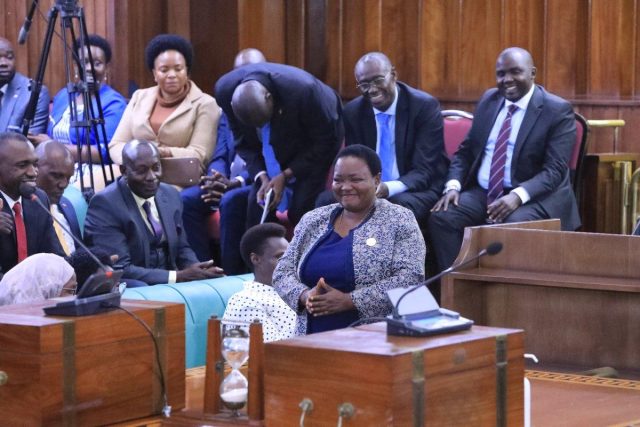
4. Robinah Nabbanja — The Prime Minister holding the Government’s response together
The traders’ strike placed Prime Minister Robinah Nabbanja in the middle of one of the week’s most pressing economic challenges.
As complaints over taxes, customs delays and enforcement mounted, Nabbanja became a key figure in the Government’s effort to engage traders and prevent the dispute from escalating further.
She presented the Government’s position before Parliament, outlining discussions involving traders, ministries and Uganda Revenue Authority.
The proposed review of taxation affecting textiles and garments, together with efforts to address delayed customs clearance, became central to the response.
Nabbanja also announced plans for an inter-agency revenue harmonisation committee under her office to engage traders and other stakeholders.
Her task is not an easy one. Government must address traders’ concerns without undermining tax collection, while restoring confidence in the business community and preventing another shutdown.
The coming negotiations will test her ability to bring different sides to the table and turn Government promises into practical solutions.
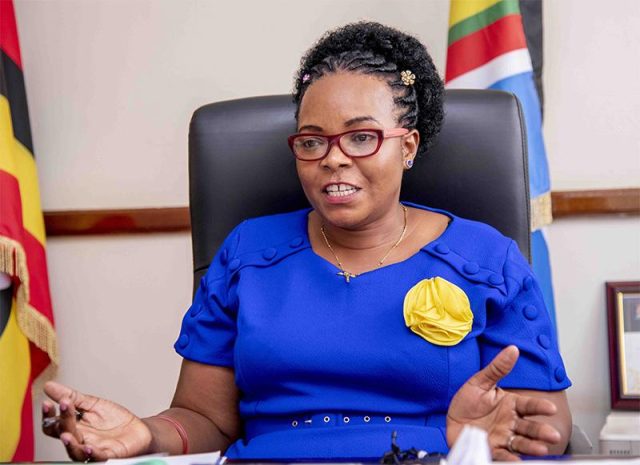
5. Persis Namuganza — The minister with a demolition message for Kampala
State Minister for Lands, Housing and Urban Development Persis Namuganza delivered one of the week’s toughest messages to Kampala property owners, warning those who had altered approved building plans to demolish their structures.
“If you know you have changed your building plan, demolish your building immediately. Those in Kampala basements, vacate now,” she told journalists at Parliament on Wednesday.
Her warning targeted building owners who have converted spaces originally designated for basement parking into shops, offices and other commercial establishments.
The intervention comes amid growing concerns about flooding, congestion, building safety and poor urban planning in Kampala, where parking facilities are increasingly being put to alternative commercial use.
Namuganza has previously raised concerns about old and unfit buildings, arguing that Kampala needs a stronger approach to urban redevelopment, enforcement and proper planning.
She has also called for solutions to revive Uganda National Housing and Construction Company, warning that Government’s reluctance to adequately fund the state-owned firm could undermine efforts to save it.
Her week brought two major urban issues into focus: the need to enforce building regulations and the challenge of rescuing Uganda’s public housing institution.
6. Dr Diana Atwine — Uganda’s health shield against Ebola
As Uganda tightened measures to prevent Ebola from entering the country from neighbouring Democratic Republic of Congo, Ministry of Health Permanent Secretary Dr Diana Atwine became one of the key officials at the centre of the public health response.
The additional preventive measures included heightened surveillance, traveller screening and restrictions targeting activities in high-risk areas as authorities sought to prevent the importation and spread of the disease.
The measures have implications for travellers, border communities, event organisers, schools, hotels and transport operators, with health authorities emphasising vigilance and cooperation.
Atwine’s role is particularly significant given Uganda’s history with Ebola outbreaks and the need to act before a suspected case becomes a wider public health emergency.
Her message this week was largely about preparedness — ensuring that Uganda does not wait for the virus to cross its borders before responding.
As the health ministry strengthens surveillance and public awareness, Atwine remains one of the officials whose decisions could have far-reaching consequences for the country’s health security.
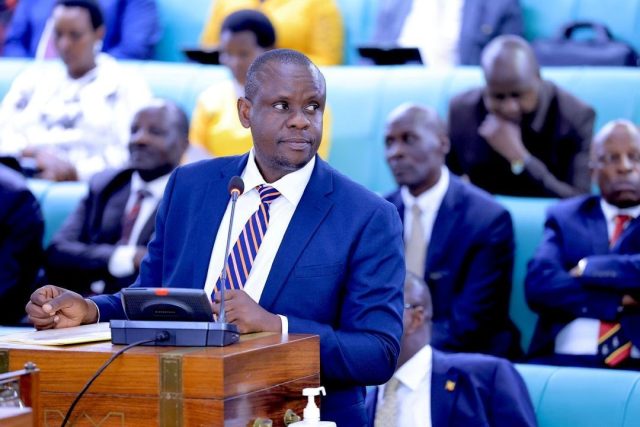
7. Balaam Barugahara — The minister under the accountability spotlight
Minister of State for Local Government Balaam Barugahara remained among the personalities attracting attention over accountability, government programmes and the management of public resources.
The concerns surrounding the implementation of government interventions, including wealth creation programmes, have kept the spotlight on local government structures and whether money allocated to communities is producing measurable results.
Across different districts, questions continue to emerge about inactive projects, accountability gaps, staffing challenges and the effectiveness of programmes intended to lift households out of poverty.
Barugahara’s growing public profile has placed him in a position where expectations are high for more than statements and investigations.
The real measure of his interventions will be whether they lead to improved accountability, action against wrongdoing and better delivery of services to the people.
In a country where citizens increasingly demand evidence of how public money is spent, the minister’s work remains a closely watched part of the accountability conversation.
8. Martin Mapenduzi — The MP asking why Karamoja is still hungry
The Chairperson of Parliament’s Committee on Presidential Affairs, Martin Mapenduzi, emerged prominently in the debate over food insecurity in Karamoja, where communities continue to struggle with hunger despite years of government interventions.
The committee’s findings raised questions about public expenditure, water infrastructure, disaster preparedness and the effectiveness of interventions intended to address the region’s recurring food crisis.
Among the concerns were investments in valley tanks and dams that reportedly have not delivered the expected results in some communities.
Mapenduzi also pushed for interventions to address school attendance among children affected by hunger, including school feeding programmes.
His report brought an uncomfortable question back to the national agenda: why does Karamoja continue to experience severe food insecurity despite repeated government programmes and investments?
The debate is not merely about relief food. It touches on accountability, infrastructure, livelihoods, climate resilience and the long-term development of a region that has remained vulnerable for decades.
Mapenduzi’s contribution put the spotlight on the need to move beyond emergency responses and find lasting solutions.

9. Harriet Nakwede — The woman demanding answers before more money is spent
Shadow Minister for the Presidency Harriet Nakwede stood out in the Karamoja debate for demanding accountability before additional resources are committed to new interventions.
Nakwede presented a minority report challenging the approach to addressing hunger and drought in Karamoja, arguing that Government must first establish whether previous programmes delivered value for money.
Her position was that the region’s challenges cannot be solved simply by constructing more dams and water facilities without investigating the performance of existing projects and the utilisation of funds already spent.
She called for a forensic value-for-money audit and a socio-economic audit of interventions in Karamoja before fresh funding is released.
Her intervention offered a different perspective from the calls for more spending, focusing instead on transparency, efficiency and the need to understand why previous interventions have failed to produce lasting change.
The debate brought Nakwede into the spotlight as one of the voices demanding that public expenditure be matched by results.
For Karamoja, the issue is deeply consequential: communities cannot continue to face hunger while the country debates billions spent on programmes whose impact remains contested.
10. John Kabanda — The traders’ voice in the tax battle
Federation of Uganda Traders Associations president John Kabanda became one of the prominent voices in the dispute between Kampala traders and Government over taxation, customs procedures and the cost of doing business.
The traders’ grievances centred on tax enforcement, delayed clearance of imported goods and the financial burden associated with merchandise held at customs.
The dispute has exposed frustrations among importers who say delays leave them facing additional charges, bank interest, deteriorating goods and losses that threaten their businesses.
Kabanda’s role in presenting traders’ concerns helped move the dispute from shop closures and street protests to negotiations with Government and Parliament.
The traders are seeking changes that would make tax administration and customs procedures more predictable, reduce unnecessary delays and protect businesses from losses.
With Government promising engagements and reviews, Kabanda is among those expected to help determine whether the negotiations will deliver a lasting solution or merely end the immediate strike.
His week was a reminder that Uganda’s economic debate is not only about tax revenue and national targets — it is also about the survival of businesses, jobs and livelihoods.