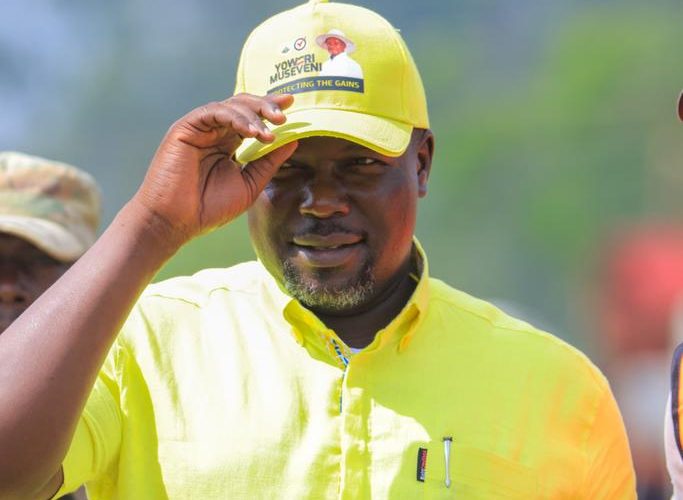


Richard Todwong: From Student Activist to Architect of NRM’s Historic Victory
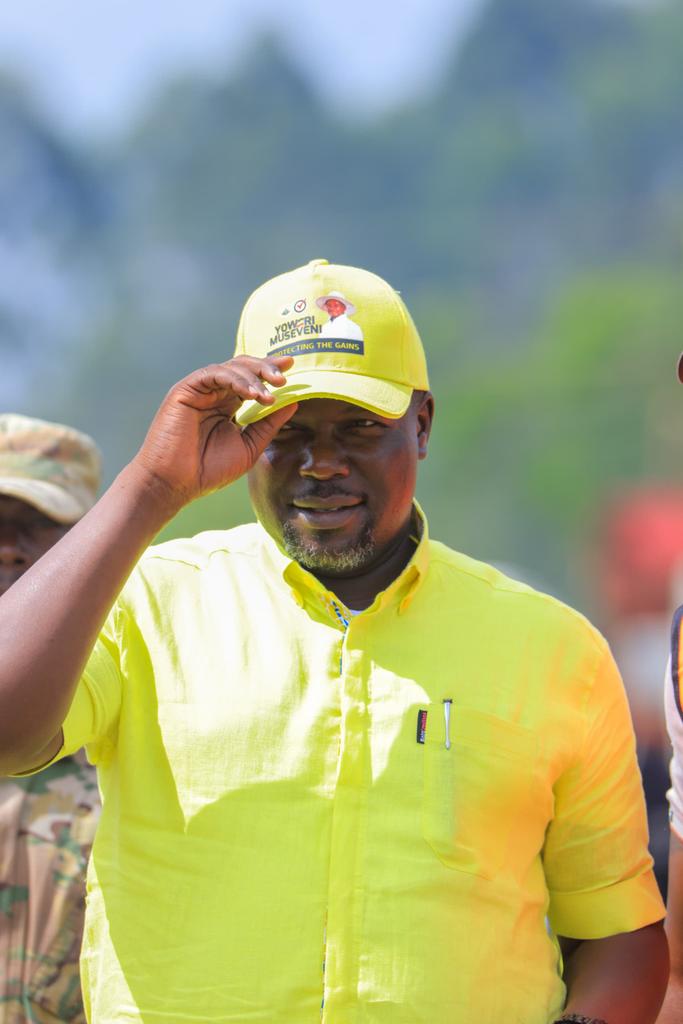
The political journey of Richard Todwong is a story of steady ascent shaped by organisation, ideological discipline, and an unwavering belief in grassroots mobilisation.
Long before he delivered the most decisive electoral victory ever recorded under an NRM Secretary General — a commanding 71.56 percent of the national vote in the 2026 general elections — Todwong was already being moulded by leadership experiences that began in his student years and matured through decades of service to the National Resistance Movement (NRM).
Unlike many political figures whose rise is defined by sudden prominence, Todwong’s leadership was forged early and refined patiently. His political consciousness took root during his years as a student volunteer and activist, when he emerged as one of the first university students to openly and positively speak about the NRM in Northern Uganda, at a time when the region was largely hostile to the party.
That period tested his resolve. His firmness, organisational discipline, and ideological clarity helped recruit many cadres into the NRM from Northern Uganda. Notably, most of the current NRM leaders from the Acholi sub-region trace their political beginnings to Todwong’s early mobilisation efforts. Those who worked with him recall a disciplined organiser focused less on personal visibility and more on building enduring structures.
This grounding in student leadership laid the foundation for his entry into national politics within a movement that historically values cadres shaped through ideological commitment and organisational service. Todwong steadily earned trust within party ranks, positioning himself as a reliable mobiliser and administrator who understood the NRM from the ground up.
His rise continued when he became Member of Parliament for Nwoya County, where he gained firsthand experience in legislative work, constituency representation, and public accountability. His time in Parliament deepened his understanding of policy implementation and the everyday concerns of citizens, strengthening his connection with grassroots communities — a link that would later prove critical in national mobilisation efforts.
Before his parliamentary tenure, Todwong had served as Special Presidential Advisor for Northern Uganda, a role that placed him at the heart of post-conflict political engagement and mobilisation in the region. The position sharpened his appreciation of reconciliation politics, regional inclusion, and the strategic importance of Northern Uganda within the national political landscape.
His organisational abilities were further recognised when he was appointed Minister in charge of Political Mobilisation, operating at the intersection of government programmes and party structures. In this role, he coordinated outreach efforts, strengthened political messaging, and reinforced alignment between state initiatives and the NRM’s grassroots machinery.
Todwong later rose to the position of Deputy Secretary General of the NRM, placing him at the core of the party’s administrative and political operations. As Deputy SG, he was deeply involved in coordinating party activities, implementing resolutions, managing internal processes, and enforcing discipline — experiences that would shape his leadership philosophy.
By the time he assumed office as NRM Secretary General, Todwong had accumulated experience across student mobilisation, regional political engagement, Parliament, ministerial mobilisation, and party administration. Yet his elevation was met with mixed expectations. Supporters viewed him as a disciplined cadre who understood the movement’s DNA. Skeptics questioned whether his low-key public profile could deliver decisive electoral outcomes in an increasingly competitive political environment.
Assuming office as something of an underdog, Todwong inherited a party facing significant challenges — demographic shifts, internal fatigue in some structures, historical debt burdens, and an opposition eager to exploit organisational weaknesses. His response was neither dramatic nor rhetorical. Instead, he returned to structure.
As Secretary General, Todwong prioritised institutional renewal and administrative reform. For the first time in the party’s history, the NRM established a fully digitalised membership register, providing clear and verifiable data on party membership and voter strength. Party financing was restructured, with resources channelled directly through district accounts, ensuring accountability and operational efficiency.
Under his leadership, all district party offices became operational, most historical party debts were cleared, and the NRM embarked on constructing permanent party offices in several districts across the country — a visible marker of institutional consolidation.
Grassroots engagement remained the centrepiece of his strategy. Drawing from his student activism and early mobilisation experience, Todwong consistently emphasised that a mass party survives through constant presence among the people. He championed the reactivation of village, parish, and district committees, strengthened youth and women leagues, and promoted continuous engagement beyond election cycles.
Looking ahead, Todwong has also articulated plans to introduce sustained cadre-ship and ideological training, aimed at nurturing a politically conscious and disciplined party membership capable of sustaining the NRM beyond electoral cycles.
As the 2026 elections approached, Todwong oversaw a nationwide mobilisation strategy anchored on unity, early preparation, and message discipline. Internal disagreements were addressed promptly, primary elections were managed to minimise divisions, and candidates were encouraged to campaign collectively. This approach significantly reduced internal sabotage — a recurring challenge in past electoral cycles.
Equally important was the alignment between the NRM Secretariat and President Yoweri Kaguta Museveni’s campaign. Todwong ensured that party structures worked seamlessly with the President’s messaging on wealth creation, stability, peace, and economic transformation, enabling the NRM to campaign as both a governing party and a future-oriented movement.
When results were declared, the outcome was historic. The NRM secured 71.56 percent of the national vote, the highest ever delivered under a Secretary General. The party strengthened its performance in competitive regions, consolidated traditional strongholds, and demonstrated renewed organisational vitality nationwide.
For Todwong, the victory was not merely personal triumph but institutional validation. It affirmed the enduring relevance of disciplined structures, grassroots mobilisation, and leadership built over time.
Today, Richard Todwong’s journey — from student activist in a hostile political environment to Secretary General delivering a historic mandate — stands as a testament to the power of quiet builders. In reshaping the fortunes of the NRM, he has shown that lasting political success is rarely accidental: it is organised, nurtured, and earned over time.