

Activists Urge King To act Now
By James Kabengwa
London. Saturday, May 30, 2026, brought a sharp, clear breeze to the streets of London, but the atmosphere outside the Nigerian Embassy was burning with the energy of a deeply rooted, decades-long grievance.
A dedicated group of human rights defenders had gathered in the heart of the city, transforming the stone pavement into a prominent stage of political resistance.
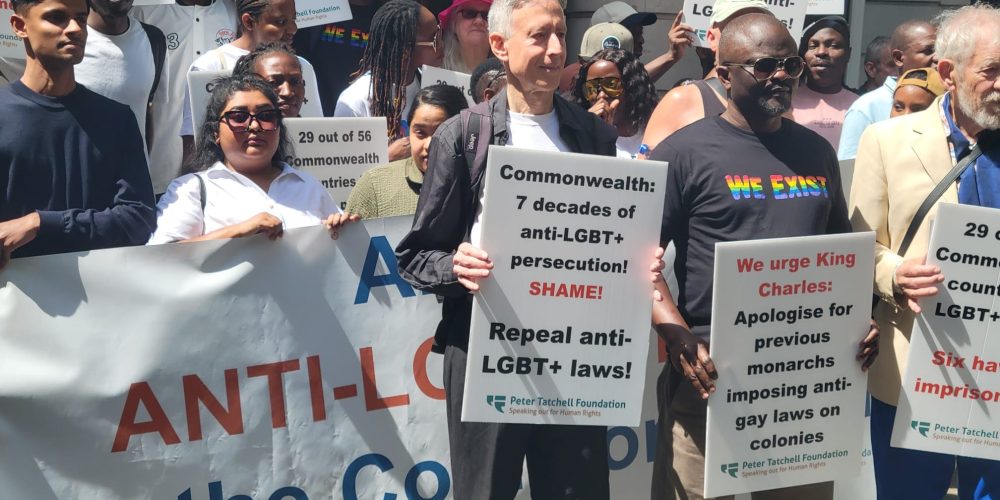
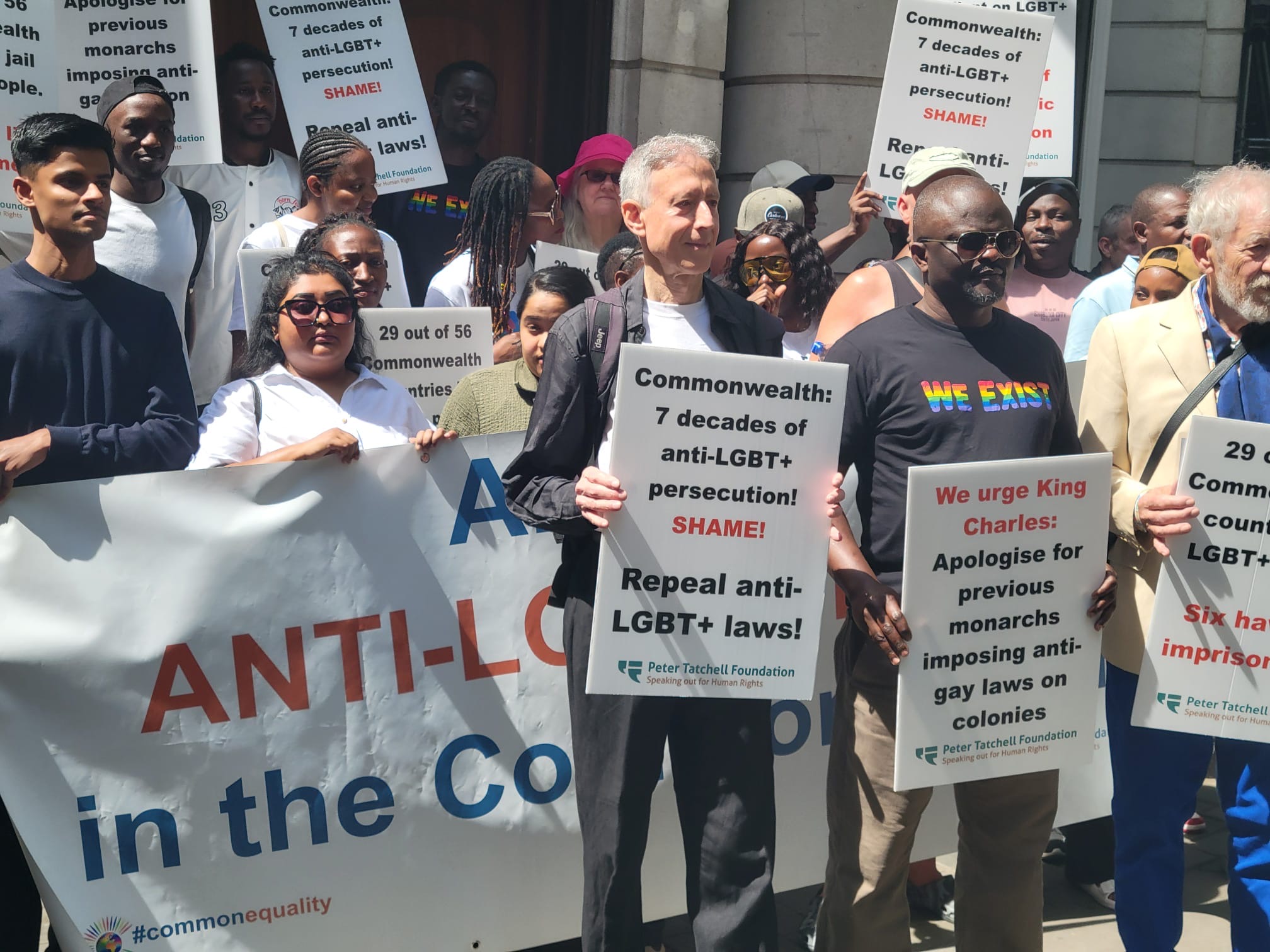
At the center of the demonstration stood Peter Tatchell, the veteran British human rights campaigner and Director of the Peter Tatchell Foundation. Flanked by international advocates, including prominent Ugandan activist Abbey Kiwanuka, the group raised a sea of bold placards to face the arriving international dignitaries, passing traffic, and gathering onlookers. The atmosphere was charged with a sense of urgent purpose as the protestors stood side-by-side, united by a singular, global mission.
The core purpose of the demonstration was to directly confront a deeply rooted legal injustice: the ongoing criminalization of same-sex intimacy across the globe. For many of the demonstrators present, the issue was intensely personal, representing a daily battle against state-sanctioned discrimination. They were there to highlight a stark and troubling reality—that out of 56 Commonwealth nations, 29 still maintain punitive, anti-gay legal codes that actively restrict the lives and freedoms of millions of citizens.
What drove the protest to the steps of Westminster on this particular Saturday was a desire to address the historical origin of these laws. The activists pointed out that these discriminatory statutes were not native traditions of the lands where they are enforced, but were rather institutional legal codes originally exported and imposed by the British Empire during the colonial era under the authority of past monarchs.
With cameras flashing and a crowd building along the security barriers, the message of the demonstration was made explicitly clear through the placards held high by Tatchell and Kiwanuka. They were publicly calling upon King Charles III, in his symbolic role as the Head of the Commonwealth, to issue an official apology or a formal statement of regret for the colonial-era laws that continue to impact lives today. Beyond this historical reckoning, the gathering served as an urgent appeal to modern world leaders to finally strike these laws from their books, championing a future rooted in universal human rights, dignity, and legal equality for all people.
The core purpose of the demonstration was to directly confront a deeply rooted legal injustice: the ongoing criminalization of same-sex intimacy across the globe. For many of the demonstrators present, the issue was intensely personal, representing a daily battle against state-sanctioned discrimination. They were there to highlight a stark and troubling reality—that out of 56 Commonwealth nations, 29 still maintain punitive, anti-gay legal codes that actively restrict the lives and freedoms of millions of citizens.
What drove the protest to the steps of Westminster on this particular Saturday was a desire to address the historical origin of these laws. The activists pointed out that these discriminatory statutes were not native traditions of the lands where they are enforced, but were rather institutional legal codes originally exported and imposed by the British Empire during the colonial era under the authority of past monarchs.
With cameras flashing and a crowd building along the security barriers, the message of the demonstration was made explicitly clear through the placards held high by Tatchell and Kiwanuka. They were publicly calling upon King Charles III, in his symbolic role as the Head of the Commonwealth, to issue an official apology or a formal statement of regret for the colonial-era laws that continue to impact lives today. Beyond this historical reckoning, the gathering served as an urgent appeal to modern world leaders to finally strike these laws from their books, championing a future rooted in universal human rights, dignity, and legal equality for all people.