

Uganda’s Elections and the Politics of Silence
By Richard Lugobwa Kizza
LONDON. As Uganda approaches the January 15, 2026, general election, fresh concerns have emerged from opposition leaders, civil society organizations, digital rights advocates, international observers, and citizens over the increasing use of Uganda’s communications regulator to restrict information flow during election periods, a move that undermines the credibility of the forthcoming polls.
Laws, backed by the ruling National Resistance Movement (NRM) that criminalize a wide range of digital communications during the electoral period, and the threat of communication blackouts are part of a broader strategy to marginalize dissent, suppress public scrutiny, and pre-empt rejection of electoral outcomes, under the guise of curbing “inflammatory” content and preserving national stability.
At the center of the debate is the Uganda Communications Commission (UCC), the statutory body mandated to regulate broadcasting, telecommunications, and online communications. Under President Yoweri Museveni’s long-standing administration, the UCC has repeatedly enforced directives that result in the suspension of social media platforms, internet access, and independent broadcasting during politically sensitive periods.
Uganda’s election cycles in recent years have frequently seen communications clampdowns. During the 2021 presidential election, when President Yoweri Museveni faced strong opposition from pop star-turned-politician Robert Kyagulanyi, known as Bobi Wine, the government ordered a sweeping internet blackout that lasted approximately 5 days, affecting journalists, election observers, businesses, and ordinary citizens seeking information about the electoral process.
These measures go beyond security considerations and amount to deliberate efforts to control narratives, limit mobilization, and obstruct independent reporting. Communication blackouts disproportionately affect opposition campaigns, which rely heavily on digital platforms to reach supporters in an environment where state-owned and pro-government media dominate traditional airwaves.
Social media has become a primary arena for campaigning, sharing information, and organising civic engagement, especially among young voters who are less tied to traditional media. The repeated targeting of these platforms has frustrated many Ugandans who view online spaces as critical to transparent political discourse and community mobilisation.
Although local and international groups, Human rights and governance organizations, have warned that communication shutdowns violate the freedom of expression, access to information, and weaken public trust in electoral institutions, General Museveni has always defended the internet blackouts, accusing foreign technology companies of interfering in Uganda’s democratic process with bias in favor of opposition voices.
The Electoral Commission, which is constitutionally mandated to organize elections, lacks independence, as its leadership is appointed by General Museveni and therefore susceptible to executive influence. In this context, restrictions on communication create an environment in which election irregularities can occur with limited public scrutiny.
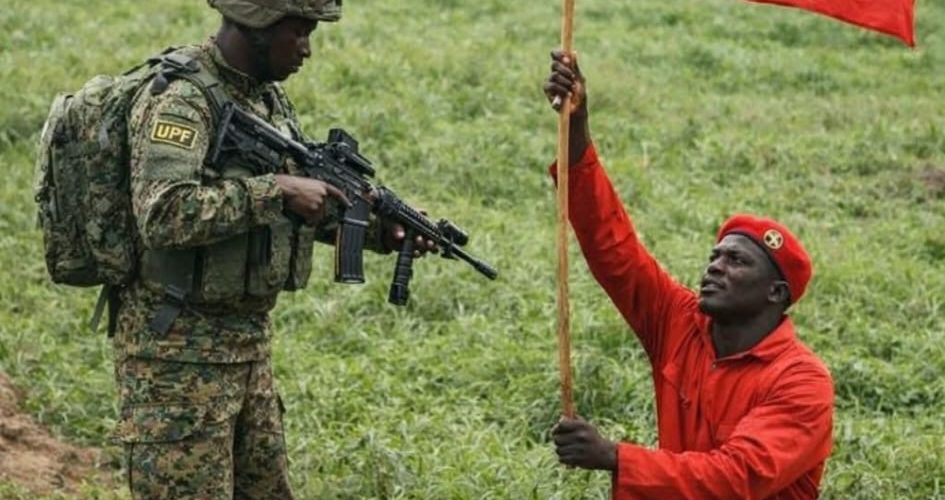
The narrative that these restrictions are primarily intended to reduce violence or misinformation is misleading. In reality, they are aimed at suppressing mass public opposition and protests arising from contested electoral results. Bobi Wine and his supporters have consistently warned that the regime uses communication blackouts to cut off citizens’ ability to organise, independently verify results, and demand accountability for electoral irregularities.
Public sentiment among many Ugandans reflects deep skepticism toward electoral transparency and the credibility of official results. Despite Museveni’s decades in power, the country’s youthful population views him as out of step with their aspirations, while Bobi Wine has galvanised sections of the electorate with a promise of generational renewal.
Nevertheless, the government and its communication regulatory bodies remain adamant, disregarding the impact of the internet shutdown. The debate continues to intensify as Uganda approaches future electoral cycles. Analysts warn that repeated communication shutdowns risk isolating the country digitally, damaging its international reputation, and discouraging investment in the technology sector. More importantly, they caution that restricting information during elections may deepen political polarization and erode citizens’ confidence in democratic processes.
As pressure mounts from civil society and opposition groups for electoral reforms, calls are growing for clearer legal safeguards to prevent the misuse of regulatory bodies and to guarantee open communication during elections. Whether these calls will translate into policy changes remains uncertain, but the issue is likely to remain a central point of contention in Uganda’s evolving political landscape.
The writer is an advocate for democracy and justice through the arts, media and other platforms
Email: richardlk63@gmail.com
Tel: +447351353725