

Uganda’s most active Government communicators on social media
In Uganda’s rapidly changing media environment, government communication is no longer confined to press conferences, official statements and television interviews.
Social media has become one of the most important channels through which ministries, departments, agencies and other public institutions communicate directly with citizens.
For many government communicators, platforms such as X, Facebook and institutional websites have become an extension of the newsroom, providing instant updates, responding to public concerns, explaining government programmes and supplying journalists with information.
Based on visibility, consistency, responsiveness and the ability to turn government business into accessible public information, a number of government communication practitioners and teams stand out.
1. Allan Ssempebwa Kyobe – Ministry of Works and Transport
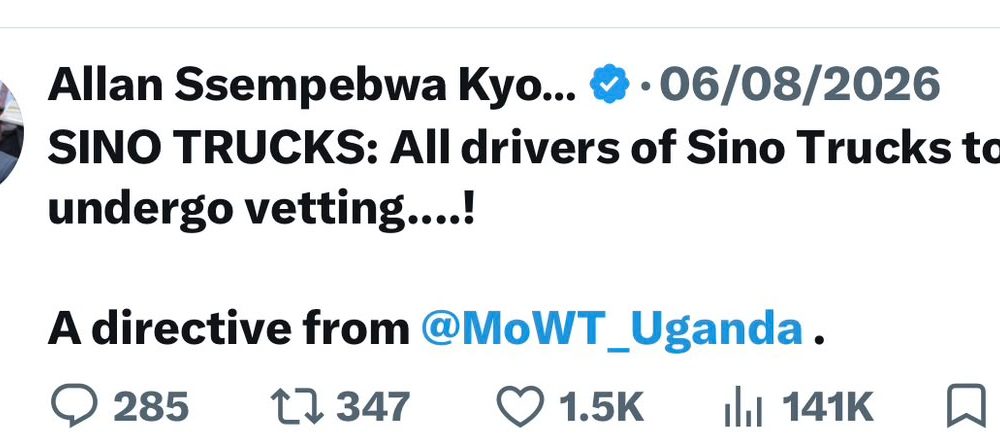
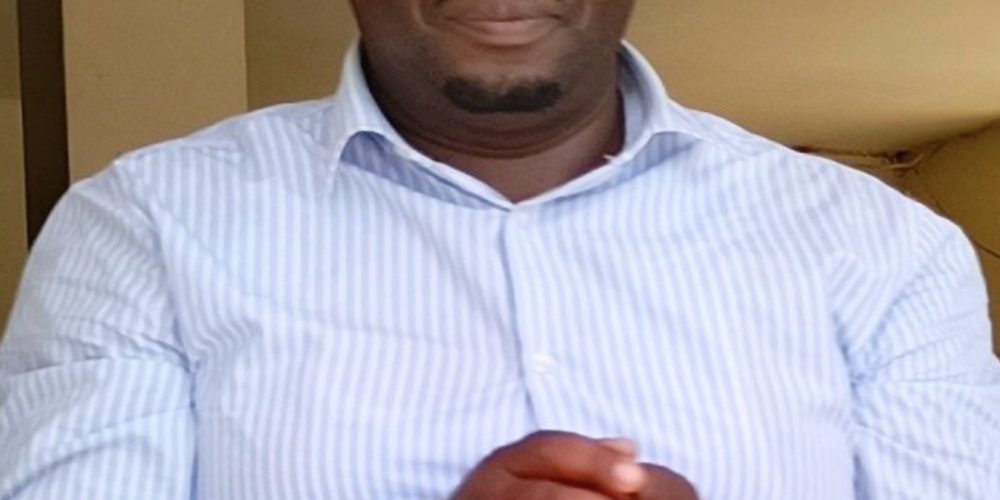
At the top of the list is Allan Ssempebwa Kyobe, a communications practitioner at the Ministry of Works and Transport.
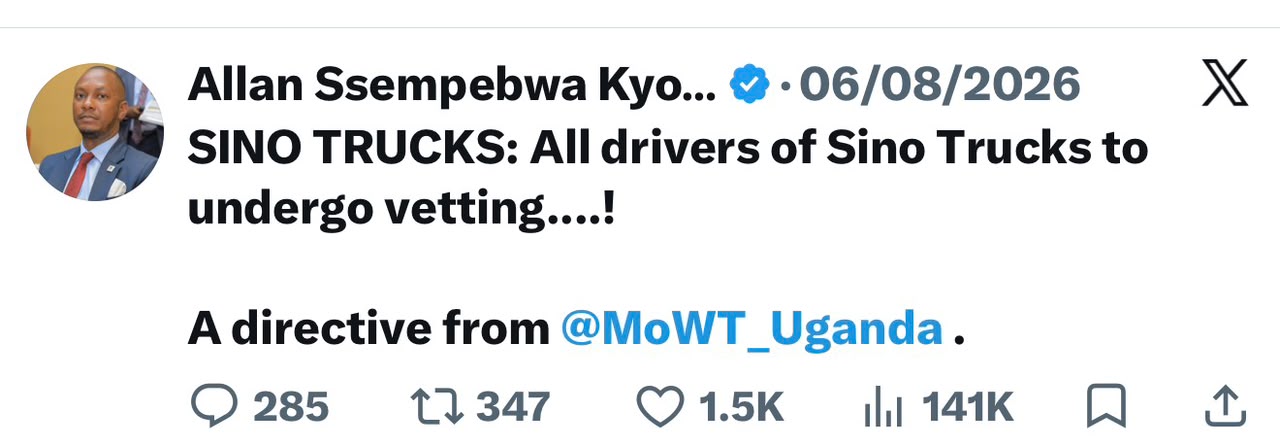
Ssempebwa has emerged as one of the most visible and active government communicators on social media, particularly on X, where he regularly shares developments from the roads and transport sector.
His communication covers road construction and rehabilitation, road inspections, transport regulation, infrastructure projects and activities involving ministry officials.
He has also demonstrated an ability to combine social-media communication with traditional media engagement, making him a familiar source of information for journalists covering the works and transport sector.
For a ministry whose activities affect virtually every Ugandan, from road users and transport operators to communities affected by infrastructure projects, the steady flow of information from its communications desk has made Ssempebwa a prominent figure in government digital communication.
2. Nelly Kapo (Nelson Bwire) – State House
Nelly Kapo has carved out a distinctive space in government communication through his work around State House activities.
While presidential communication is often formal and protocol-driven, Kapo has also brought a lighter and more relatable dimension to State House’s digital presence.
His social-media updates include light moments from State House, responses to events, clarifications and other behind-the-scenes aspects of official engagements.
This approach has helped make State House communication more engaging while still providing useful information to the public.
Kapo’s ability to combine official information with human-interest content makes him one of the individual government communicators worth watching in Uganda’s digital space.
3. Alan Kasujja – Uganda Media Centre
Alan Kasujja is another government communicator who has maintained a visible presence in the digital communication space.
At the Uganda Media Centre, his work is linked to the institution’s broader mandate of providing official information, facilitating interaction between government and the media, and keeping the public informed about government programmes and activities.
The Media Centre’s position at the intersection of government and the media gives its communication practitioners access to a wide range of public-interest issues.
Kasujja’s visibility adds to the Media Centre’s role as one of the key sources of government information for journalists and the wider public. His recent brief – one line – style has been a game changer.
4. Julius Mucunguzi – Electoral Commission
Julius Mucunguzi has been one of the recognisable voices associated with communication from the Electoral Commission.
Election-related communication requires particular attention to accuracy, timing and clarity, especially when the public is seeking information about electoral processes, polling, voter registration, results and other developments.
Mucunguzi’s engagement has helped provide information and clarification around the Commission’s activities, particularly during periods of heightened public interest.
With Uganda’s electoral cycle generating significant online discussion, the role of communicators at the Electoral Commission has become increasingly important.
5. Kituma Rusoke – Uganda Police Force
Kituma Rusoke has emerged as a prominent police communication figure, particularly as the Uganda Police Force has expanded its use of digital platforms.
Police communication often involves rapidly developing situations where the public and journalists want immediate clarification.
Rusoke’s role places him at the centre of communication on security incidents, police operations, public safety and other matters involving the force.
The police communication team has also increasingly used social media to provide updates, photographs and other information, making the platforms an important source for real-time public information.
6. Emmanuel Ainebyoona – Ministry of Health
Emmanuel Ainebyoona remains one of the better-known voices in government health communication.
Health communication requires speed, accuracy and the ability to explain technical information in language that the public can understand.
Ainebyoona has been particularly visible in communicating health developments, government interventions and public-health messages.
His work illustrates the importance of having communicators who can bridge the gap between technical government information, journalists and ordinary citizens.
7. Parliament Communications Team
Parliament’s communication machinery deserves a place on the list because of the sheer volume of information it handles.
Rather than attributing this position to a single individual, the ranking recognises the Parliament Communication and Public Affairs team as an institutional communication operation.
The team is responsible for communicating parliamentary proceedings, committee activities, legislation, statements by leaders and other developments from the House.
Parliament generates news almost every sitting day, making its communication team one of the busiest public-sector newsrooms in the country.
Its social-media platforms provide regular updates from plenary, committees, parliamentary leadership and other parliamentary activities, allowing citizens who cannot follow proceedings directly to keep up with developments.
8. State House Presidential Press Unit
Beyond individual communicators such as Kapo, the wider State House Press and Public Relations team remains one of the most active government communication operations.
Its work covers presidential engagements, speeches, appointments, meetings, regional visits, state functions and other activities involving the President and State House.
The team’s extensive use of photographs, video and written updates gives it a significant presence across Uganda’s digital information space.
9. NRM Secretariat Media and Communications Team
The NRM Secretariat Media and Communications team has also established a strong digital presence.
Although the National Resistance Movement is a political organisation rather than a government MDA, its communication machinery plays a significant role in Uganda’s broader political and public communication environment.
The team provides regular updates on party activities, leadership engagements, mobilisation programmes, meetings and statements from senior party officials.
Its use of social media, photography, video and web-based news production has created a steady stream of content around the party’s activities.
10. UPDF Communications Team
The Uganda People’s Defence Forces has developed a strong digital communication operation, providing regular updates on military activities, training, operations, recruitment, national events and engagements with communities.
The use of photographs and video has helped make military activities more accessible to the public while providing journalists with official information.
The team’s role becomes particularly important during major security developments and national events involving the armed forces.
Fisher on NwSC cuts in well but falls short as only comes in periodically and never creates a consistent interaction.
Recently, NIRA and UEDCL have also tried their best but with no consistency.
What makes a good government communicator?
Social-media activity should not be measured simply by the number of posts or followers.
The most effective communicators combine speed, accuracy, accessibility, consistency and responsiveness.
They understand that a government communicator has two major audiences: journalists who need credible information quickly and citizens who want to understand what government is doing and how it affects them.
The growing visibility of individual communicators such as Ssempebwa, Kapo, Kasujja, Mucunguzi, Rusoke and Ainebyoona also shows how government communication is evolving from institutional messaging to more direct and personality-driven engagement.
At the same time, institutional teams at Parliament, State House, the NRM Secretariat and the UPDF demonstrate the importance of coordinated communication, where social media, photography, video, traditional media and official websites work together.
The ranking is not an official government assessment or a measurement of follower numbers. It is an editorial assessment based on visibility, activity, responsiveness and effectiveness in using digital platforms to communicate public information.
As more Ugandans turn to their phones for news and government information, communicators who can provide timely, credible and accessible information are increasingly becoming an important link between public institutions and the citizens they serve.
All in all, most of them only wait to share what they are told to share and never engage in any conversation with the public.